
Wood Burner Central Heating Explained
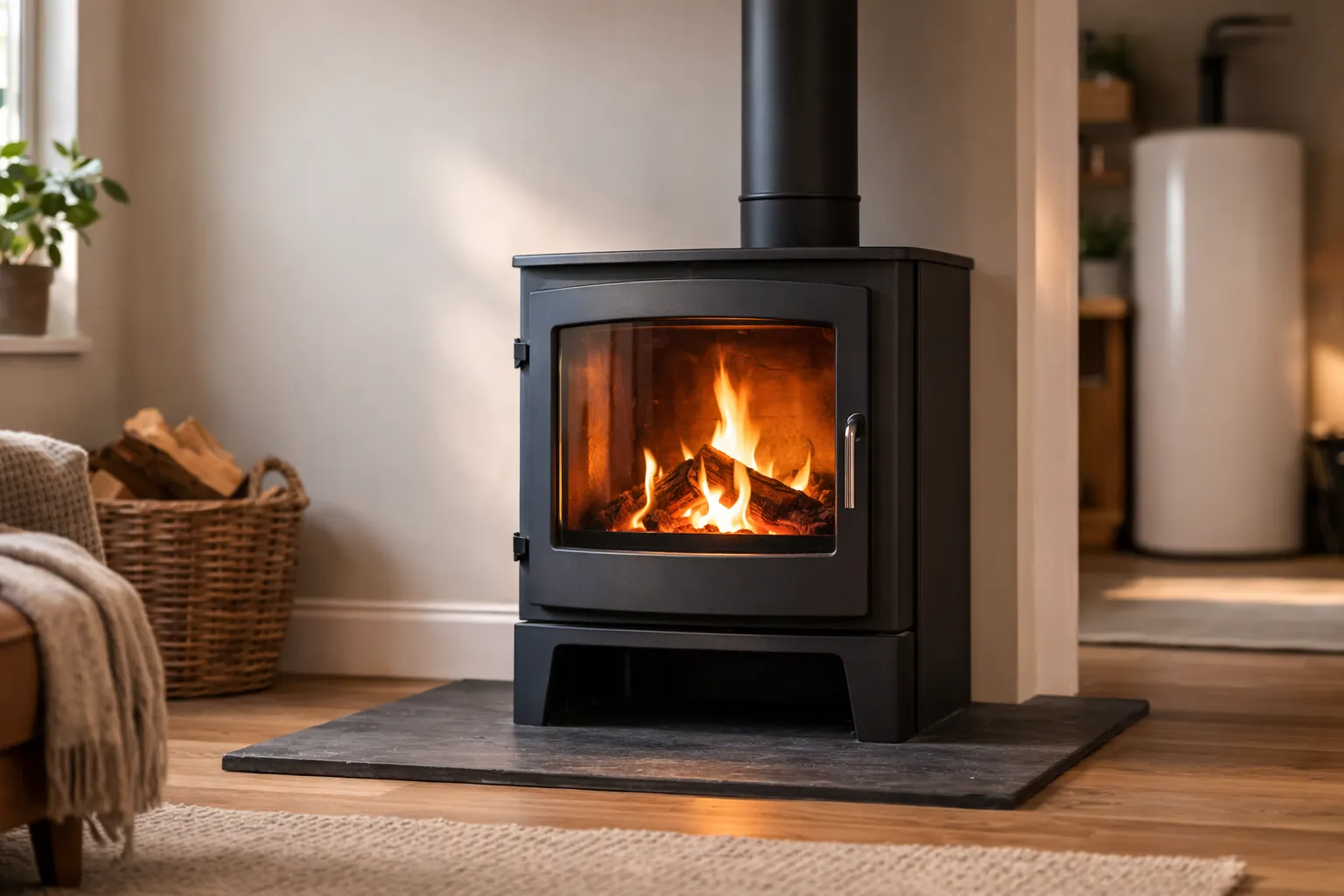
Wood burner central heating is easier to understand once we stop thinking of the stove as a cosy room feature and start treating it as a heat source feeding a water circuit. Done properly, a stove can contribute to hot water and radiators, so warmth is shared around the home rather than staying in one room.
The practical reality is that a stove does not behave like a boiler. It delivers heat quickly, it keeps giving off heat after refuelling, and it cannot be turned down with the same precision. That is why the best wood burner central heating setups feel calm and predictable, because the system is designed to manage heat safely in everyday use.
What “wood burner central heating” usually means
Most setups fall into one of these categories:
- a wood-burning stove with a back boiler (boiler stove), where part of the fire’s heat transfers into water
- a stove linked to a hot water cylinder or thermal store, which then supplies hot water and can support radiators
- a hybrid arrangement where the stove contributes when it is lit, and another heat source covers the rest
If you want a straightforward primer on the water-heating side, our guide to heating water from a wood-burning stove with a back boiler is a helpful companion.
Hot water cylinder vs thermal store
These terms get mixed up, but they are not the same thing.
- A hot water cylinder stores domestic hot water for taps and showers.
- A thermal store typically stores primary water and uses heat exchangers to supply domestic hot water and heating more flexibly.
Which suits you depends on the existing plumbing layout, the space available, and whether you want the stove to be a main contributor or a supporting one.
How it works in practice
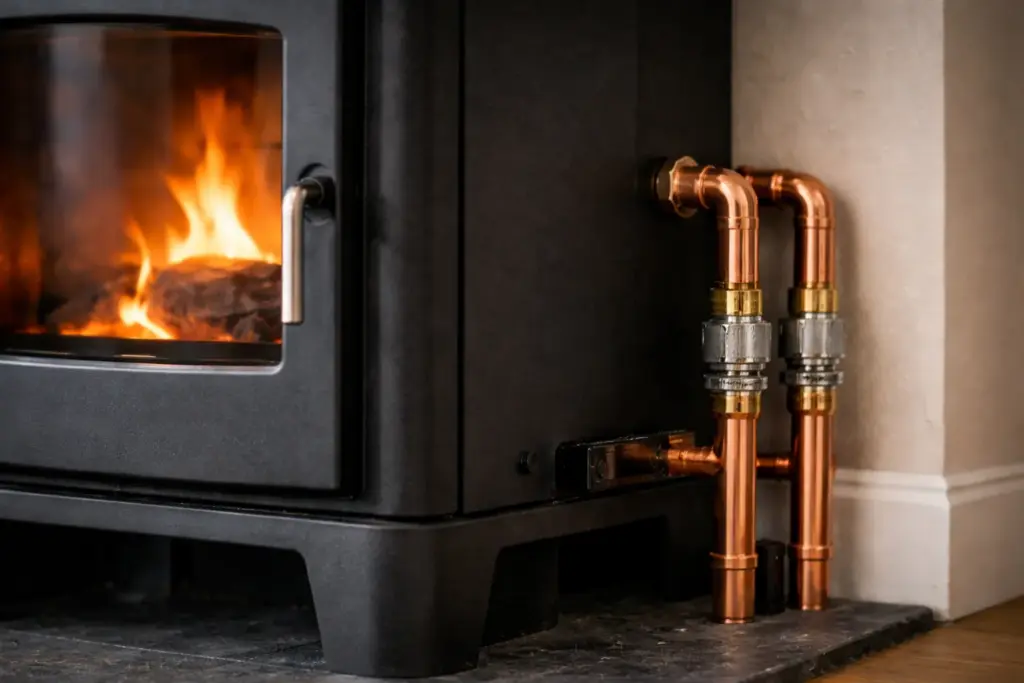
A back boiler is a water jacket built into the stove. When the fire is burning, it heats the stove body and also heats the water jacket. That hot water can then be circulated to a cylinder or thermal store, and it may also support radiators through a properly controlled circuit.
Two things catch people out most often:
- Heat arrives quickly. The system must move and shed heat safely.
- Heat does not stop instantly. The stove continues to throw heat after refuelling.
This is why design matters. In a well-planned setup, heat always has a safe route, even when demand drops.
Main system options compared
| System type | Best suited to | What to consider |
| Back boiler to cylinder + radiators | Regular stove use | Heat management and correct pipe sizing |
| Stove linked to a thermal store | Flexible setups | More components and space |
| A stove supporting another heat source | Occasional stove use | Clear priorities and controls |
If we only light the stove some evenings, a hybrid approach often feels more comfortable. It avoids “all or nothing” expectations and keeps day-to-day heating dependable even when the stove is not running.
What makes the system safe and reliable
A wood burner central heating setup is not simply “a stove connected to radiators”. A properly planned system typically includes:
- a stove with a boiler function (water jacket)
- a cylinder or thermal store matched to demand
- pumps and valves suited to the circuit
- a heat leak route (often a dedicated radiator or gravity-fed circuit)
- temperature controls and safety components to prevent overheating
- pipework sized for flow, not just convenience
The heat leak route, in plain terms
A heat leak radiator or heat dump route gives excess heat somewhere to go if demand is low or circulation is interrupted. It helps prevent overheating when the stove is producing heat, and the system is already “full”.
This is also why controls matter. We want the system to behave sensibly when hot water is already up to temperature, when parts of the radiator circuit are closed down, or when the stove is burning steadily but demand has eased.
What we check before recommending a setup
When we assess wood burner central heating, we start with how you will actually use it, then design around that.
We typically look at:
- How many hours you realistically run the stove
- The balance between the heat to the room and the heat to the water
- Radiator circuit suitability and sizing
- Cylinder or store capacity and placement
- How heat leak protection will be handled
- Pump, valve, and control strategy, so priorities are clear
- Flue route, draft, and air supply for stable combustion
This is how we keep expectations realistic and the system predictable in use.
Sizing and comfort: getting the balance right
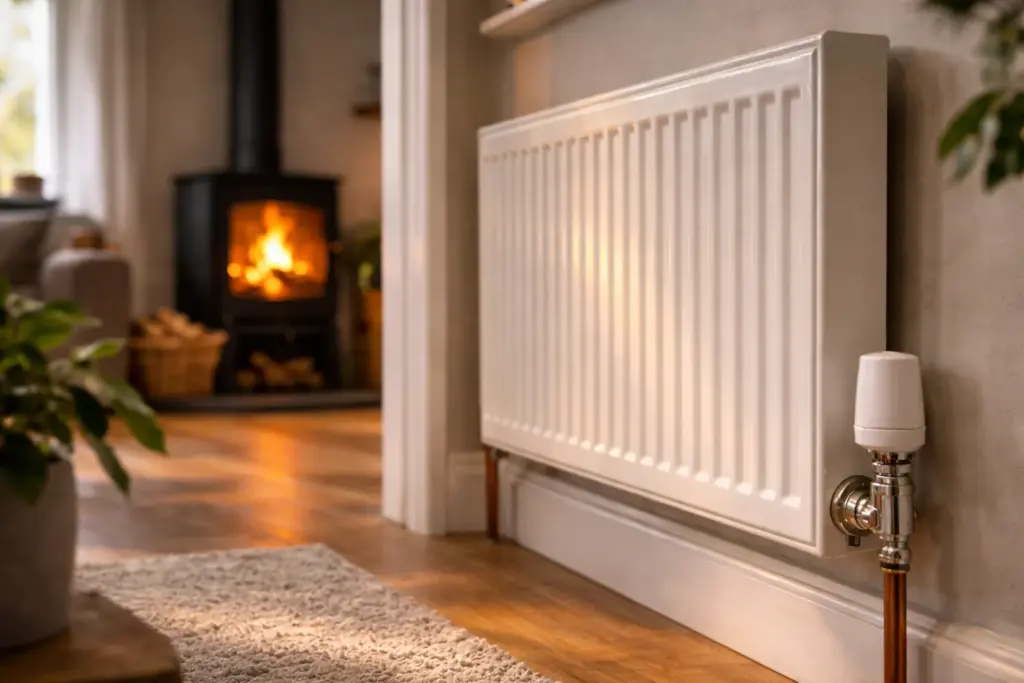
A boiler stove has two outputs happening at the same time: heat to the room and heat to the water. If the room side is underpowered, the space can feel disappointing even if the stove is heating water nicely. If the water side is underpowered, radiators may not receive meaningful support.
Where people get caught out is expecting a short evening burn to deliver the same whole-house response we are used to from a boiler. A stove can absolutely contribute, but it does its best when we run it steadily and allow the system time to build usable heat in the cylinder or store.
When systems underperform, the cause is usually straightforward: sizing, controls, or simply not running the stove long enough to charge the system.
Regulations and safety considerations
Because this is a combustion appliance tied into a water system, installation and ventilation must be done properly.
UK building guidance for combustion appliances is set out in Approved Document J. It covers air supply, flues, hearths, and protecting the building fabric.
A specific warning about redundant back boilers
If a redundant back boiler is left behind a fire and the fire is used, it can create a serious hazard. The Health and Safety Executive highlights this in its safety alert on redundant solid fuel back boilers.
Flue design and airflow: the foundation of clean heat
Wood burner central heating only works well if combustion is stable. Poor draft and incorrect flue setup can lead to smoke, poor burn control, and inconsistent heat output, which affects the water circuit too.
Our guide on chimneys and practical requirements for wood-burning stoves covers the fundamentals worth getting right early. A reliable flue setup supports a cleaner burn, steadier output, and less day-to-day fiddling.
Day-to-day operation: what makes it feel easy
A stove-linked heating system rewards steady habits. Most frustration arrives when we treat the stove like a button-controlled boiler.
What helps most:
- Use consistent, suitable fuel so combustion stays predictable
- Run the stove in steady stretches rather than short bursts
- Allow time for the cylinder or store to build usable heat
- Understand what the system prioritises when the stove is lit
- Keep sweeping and servicing regularly so airflow and heat transfer stay efficient
For a neutral overview of how biomass appliances can heat a room and contribute to hot water, see the Energy Saving Trust guide to biomass heating.
A more controllable route to central-heating-style warmth
Sometimes, what people really want from wood burner central heating is solid-fuel warmth with the predictability of a central heating appliance. In that case, a boiler-focused option designed to feed a water-based system can make more sense than a room-only stove.
Our pellet boilers range is built around that approach, with options designed for heating hot water and supporting radiators.
Have a look through the boiler range and compare outputs against your routine. If you tell us what you want to heat and how often you plan to run it, we can help you sense-check the direction before you commit.
Maintenance and longevity
Any system that includes pumps, valves, and a stove needs sensible upkeep. When performance drops, it is often due to deposits, worn seals, airflow restrictions, or neglected checks.
For a practical reminder of why upkeep matters, our article on the importance of boiler maintenance explains how one neglected component can affect the whole setup.
In summary
Wood burner central heating can be a practical way to extend stove heat into hot water and radiators, but it only feels effortless when the system is designed as one whole: stove, water circuit, controls, heat leak protection, and flue.
The key takeaway is simple: design for safe heat management first, then match the appliance to how we actually live. Done properly, wood burner central heating becomes a dependable part of the home rather than a project we are constantly fiddling with.