
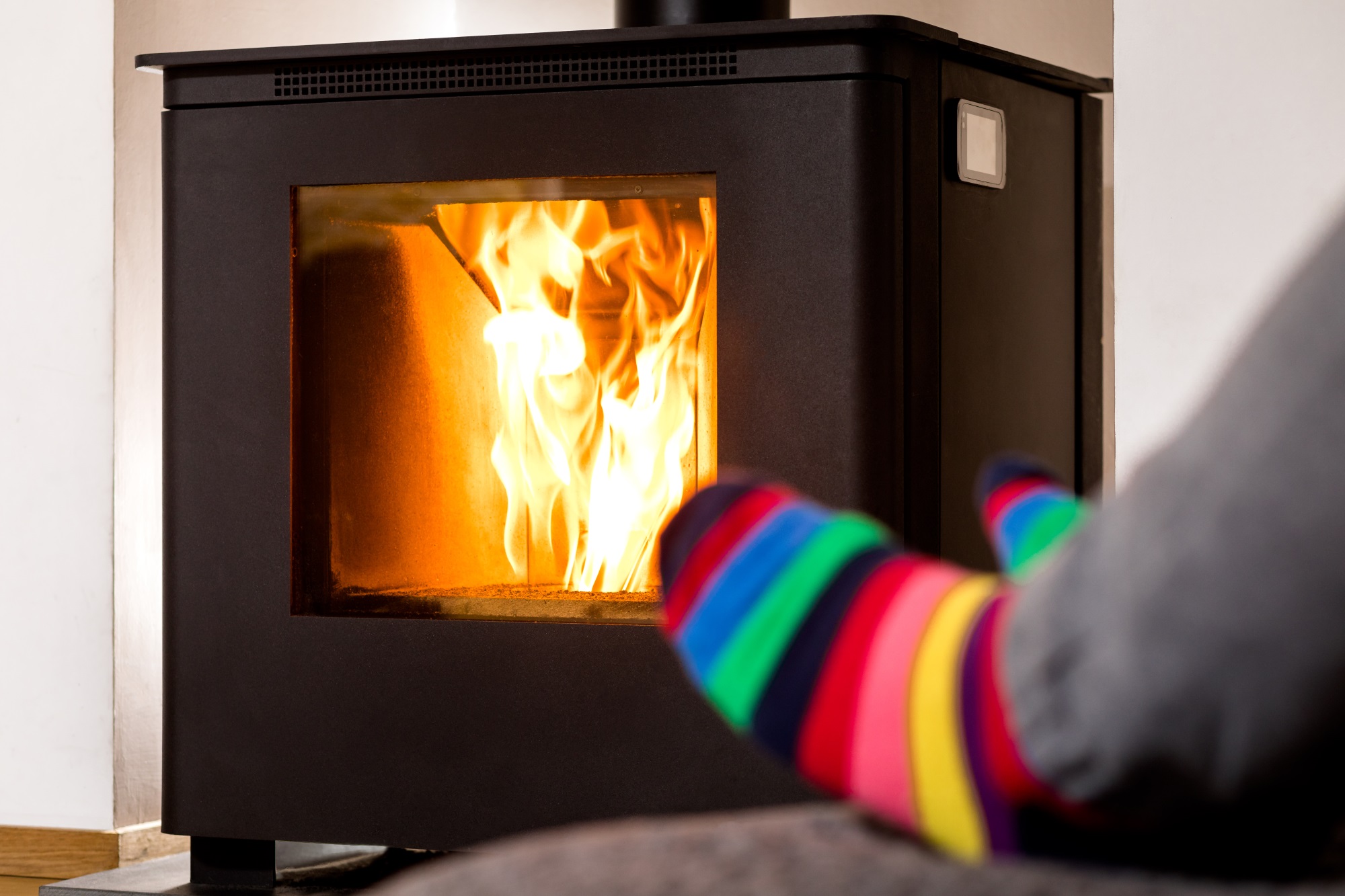
Why The Guardian is misguided to want to ban wood burning stoves
Lots of things in life are potentially harmful and dangerous, for example; parachuting, mountaineering, pot-holing, scuba–diving and driving cars, but now it seems that the innocuous wood burning stove or wooden stove burner needs to be added to the list. There is increasing discussion about a potential ban on wood burning stoves in the UK and elsewhere.
According to the UK’s Guardian newspaper and its journalist George Monbiot, then stoves wood burners should be banned on the grounds of the harm they cause by emitting smoke particles both outside the home and also inside (when the door of the stoves wood burner is opened for refuelling).
Their argument is framed as being a binary choice, and their advice can be summarised as either to keep your existing fossil-fuelled boiler (coal, oil or gas) or install a heat-pump. And this is from the very same publication that reminds us in other sections of its newspaper that we live in a Climate Emergency !
So what do we here at Island Pellet Stoves think should be done about emissions? Are wood burning stoves bad for the environment?
As engineers, we at Island Pellet Stoves Ltd take a different view to that of the Guardian and Mr. Monbiot and we look to our own recent history as a source of inspiration.
We have known for decades that emissions from the exhaust pipes of cars and lorries are harmful, but we did not ban them ! Instead, legislation was introduced by the Government which was then refined over many years to compel motor vehicle manufacturers to improve the emissions performance of their products. And this legislation was not restricted to just the vehicle manufacturers but was also applied to the fuel manufacturers to compel them to produce cleaner fuels. We have gone from vehicles running on coal to those running on today’s highly refined fuels in a little over 100 years. And that is why the Guardian and Mr Monbiot can today proclaim that aggregate emissions from motor vehicles are less than those from wood burners stoves !
So we think that there are many similar actions the Government(s) of the UK should take to improve emissions from wood burning stoves. For example;-
- Ban the use of open-fires (already the case in most of Europe)
- Implement an annual “MOT” style test on every wood burning installation and link it to the buildings insurance which can’t then be renewed without a “PASS” certificate (again this is normal in most of Europe).
- Impose gradually stricter emissions limits on wood burning stoves.
- Encourage research into how log burner stoves could be adapted to use modern flue systems, such as the balanced flue.
Just imagine where we would be if the Government had banned motor vehicles back in the 1920s and told us all to go back to using carriages pulled by animals. Well, we as a society should take a similar approach to the problem of emissions from wood burners by encouraging human ingenuity to think up cleaner ways to do it.