
When it’s ok to be Passive about the environment!
For those that manage their lives in an eco-friendly way, a Passive House will not be a new phenomenon. However, the wider public has yet to understand – or even be aware of – what a Passive House (or Passivhaus) is.
Using energy created by the sun is a well-known and understood method of being energy efficient. However, a Passive House is a standard that helps builders and home owners develop properties that need less energy from the outset.
A passive house is not a brand or product. It is a construction concept that builds a house to a specific standard that from an energy efficiency perspective is truly efficient, comfortable, affordable and ecological.
There are a number of key areas that houses complying to this voluntary energy efficiency standard must meet which broadly include:
- An annual heating and cooling demand of not more than 15 KWh/m2 per year (or be designed with a peak heat load of 10 W/m2)
- Total primary energy consumption must not be more than 60 kWh/m2 per year
- The building must not leak more air than 0.6 times the house volume per hour.
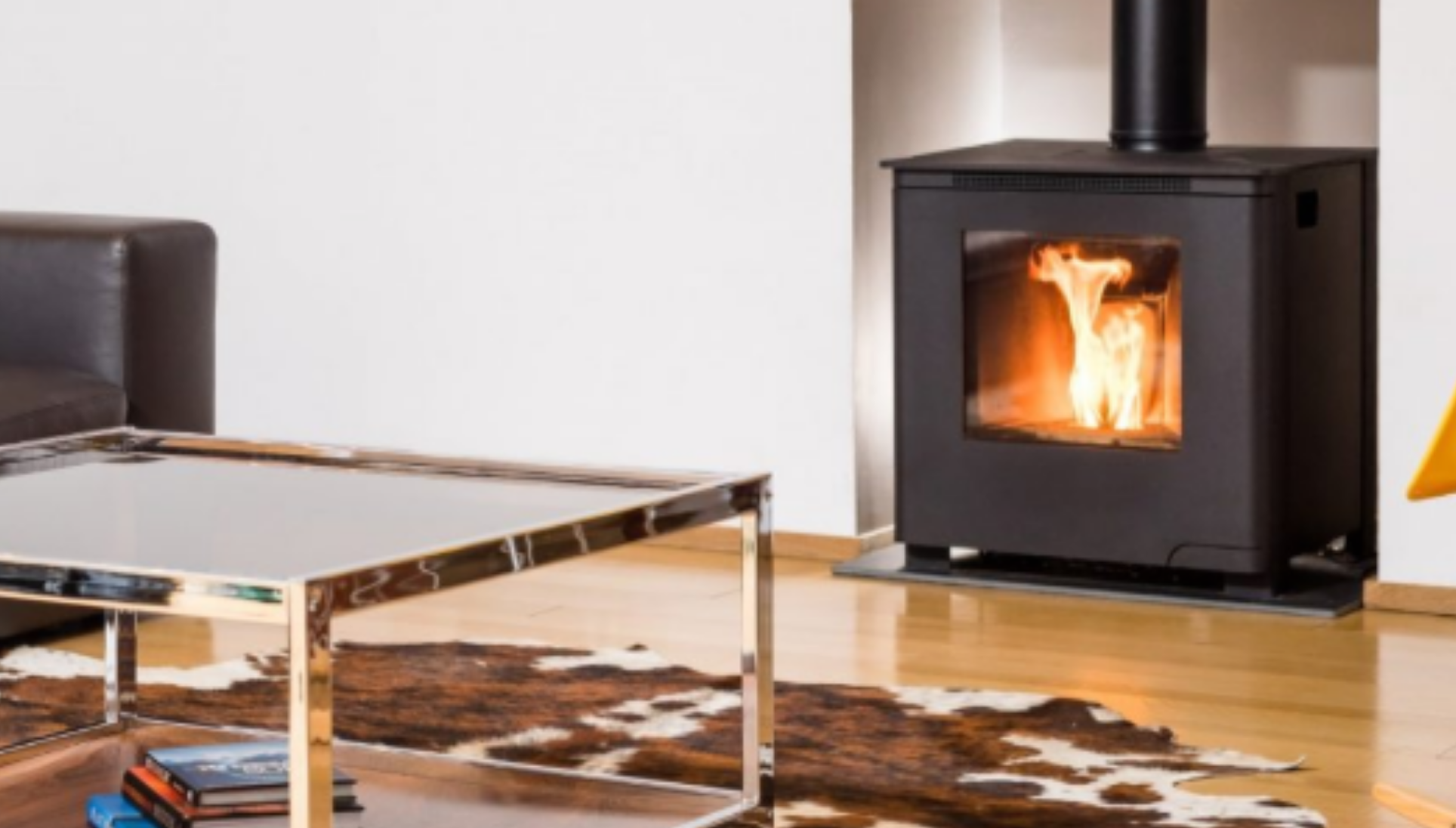
Of course, here at Island Pellet Stoves, we are particularly interested in the heating of a Passive House. When building a house that is designed to limit the need for energy – our Lundy 5 and Lundy 8 wood pellet stoves are perfect solutions! They’ll self modulate into eco-mode when the house is up to temperature, the stove door does not need to be opened to refuel (this is done via a hopper that only needs to be filled every few days) and most importantly our wood pellet stoves have balanced flues. This ensures that there is no need for combustion air to be supplied from the room (so the device is “room sealed”) and also that all the incoming air is warmed by gases leaving the room. Super efficient!
Find out more via our dedicated web page or call us on 0330 111 4747. Eco-efficiency is not usually something we’re passive about – but in this case, we’ll make an exception!