
Back Boiler Stove vs Heat Pump: A Realistic Comparison for UK Homes
Choosing between a back boiler stove and a heat pump is not really about old heating versus new heating. It is about how your home needs heat, how you like to live, and what sort of system can be fitted sensibly.
A heat pump moves heat from outside and upgrades it for your heating and hot water system. A back boiler stove, often called a boiler stove or wet stove, burns fuel and transfers part of that heat into water for radiators, hot water or a thermal store.
The key takeaway is simple: a heat pump usually suits homes designed for low-temperature heating, while a back boiler stove may suit homes where you want a visible flame, strong room heat and support for water-based heating.
At Island Pellet Stoves, we like the feel of real flame, but heating still has to make sense in the room, in the airing cupboard and on the bill.
What is a back boiler stove?
A back boiler stove is a stove with an integrated boiler. Instead of sending all its heat into the room, it transfers part of that heat into water. That water can then be used within a suitable wet heating system, such as radiators, a hot water cylinder or a thermal store.
This is different from a standard room-heater stove. A room-heater stove mainly warms the space around it. A boiler stove can share heat more widely, provided the system has been designed correctly.
If you are new to this setup, our guide to heating water from a wood-burning stove with a back boiler explains how stove-based water heating can work in practice.
How a modern pellet boiler stove works in daily life
Many modern pellet boiler stoves are designed with features such as controlled pellet feed, automatic ignition and timer-based operation, depending on the model.
In practical terms, that can mean:
- A real flame and warm focal point
- More controlled burning than a traditional log stove
- Heat for the room and a water circuit
- Less manual fuel handling than logs
- A flue-based system that still needs correct design and servicing
It is still a combustion appliance, so fuel quality, ventilation, flue route, installation and maintenance all affect performance.
Where a pellet boiler-stove fits into the comparison
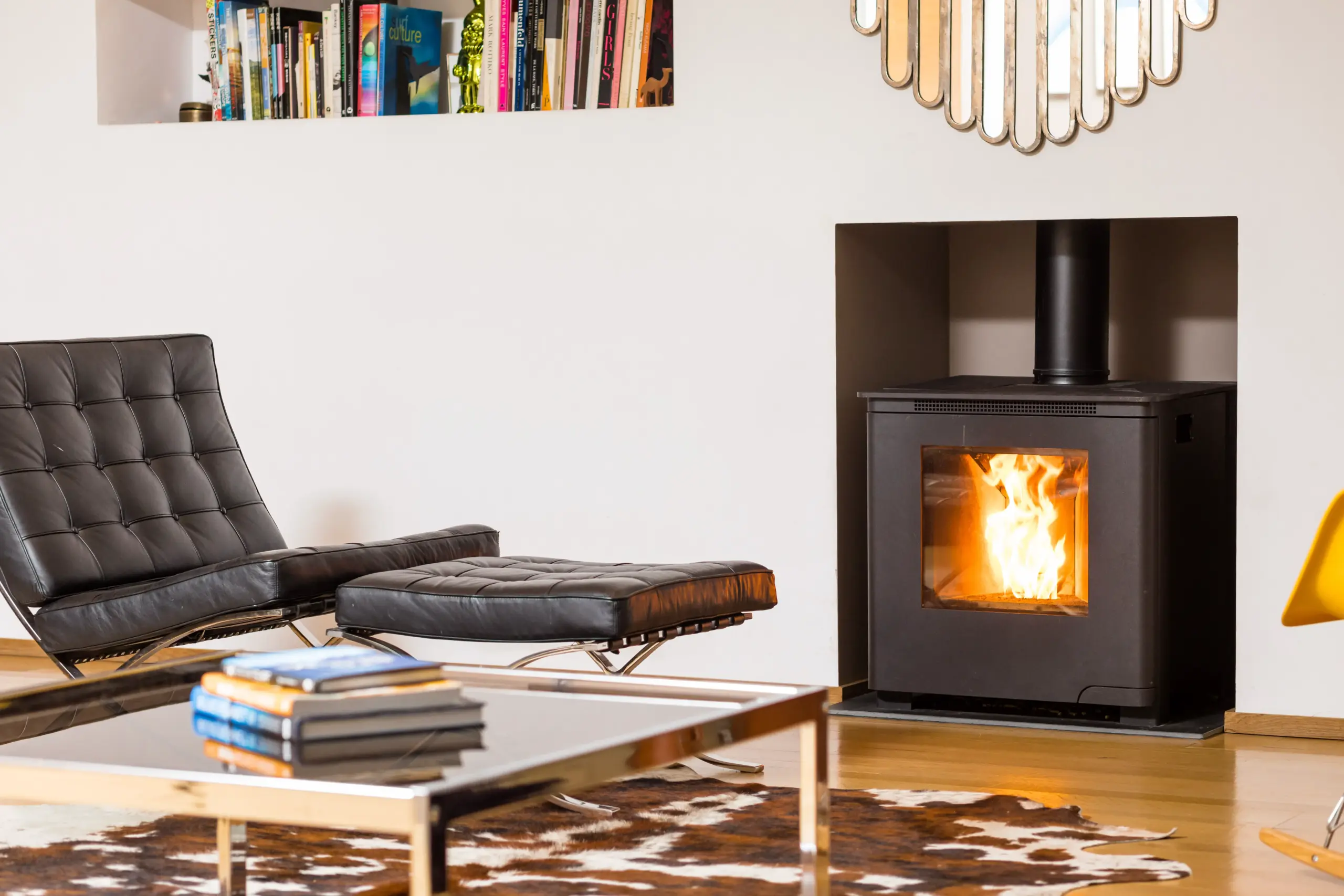
This is where a pellet boiler-stove becomes worth considering. If you want the comfort of a real flame, but you also want the stove to contribute to a wider wet heating system, a boiler-stove sits between a simple room heater and a whole-home heating appliance.
Our Lundy 8 pellet boiler-stove is one option to look at if you are comparing heat pumps with stove-based water heating. When specified and installed as part of a suitable system, this type of appliance may be used to support water-based heating, such as radiators or hot water storage.
It will not be right for every property, and the system design matters as much as the appliance itself. But if you want a heating option that combines visible flame, controlled pellet burning and the potential to do more than heat one room, visit the product page to see whether the Lundy 8 fits your plans.
What is a heat pump?
A heat pump is an electric heating system that takes low-temperature heat from outside and raises it to a usable temperature for heating and hot water.
The Energy Saving Trust’s heat pump guidance explains that heat pump efficiency is measured using the coefficient of performance, or CoP. For example, a CoP of 3.0 means the system gives out three units of heat for every unit of electricity it uses.
That figure is useful, but it is not a fixed promise for every home. Real performance depends on the system, the weather, the property and the flow temperature needed to keep the home warm.
A heat pump usually runs for longer periods at lower flow temperatures. Instead of giving short bursts of high heat, it tends to maintain a steadier background temperature.
Back boiler stove vs heat pump: quick comparison
| Factor | Back boiler stove | Heat pump |
| Main energy source | Wood pellets or suitable biomass fuel | Electricity |
| Heating style | Visible flame, room heat and water heating support | Steady low-temperature heating |
| Best suited to | Homes where a stove and a wet heating system make sense | Homes suited to low-flow temperatures |
| Hot water | Possible with the right cylinder or thermal store | Possible with the right cylinder |
| Daily use | Fuel and ash handling still apply | Mostly automatic once set up |
| Installation needs | Flue, plumbing, controls and combustion safety | Outdoor unit, plumbing, controls and heat loss design |
| Main appeal | Real flame with wider heating potential | High electrical efficiency and steady comfort |
Installation: where the real comparison starts
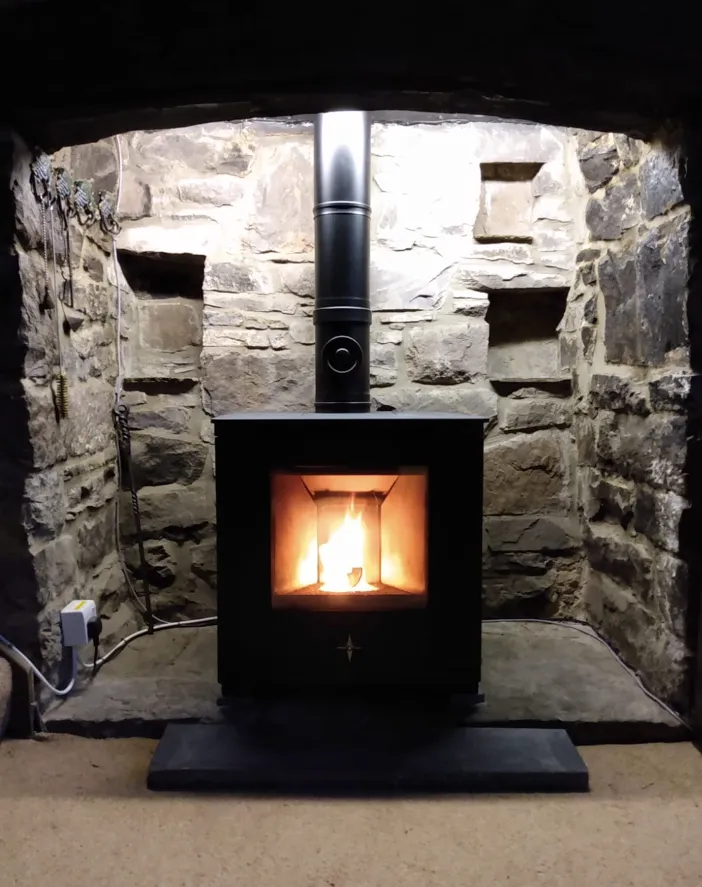
Once flues, radiators, cylinders, insulation and daily habits enter the picture, the simple comparison disappears.
A back boiler stove needs proper flue design, plumbing, safety controls and heat management. In many cases, this may involve a hot water cylinder, buffer vessel or thermal store.
Official guidance on combustion appliances and fuel storage systems covers areas such as air supply, discharge of combustion products, flues, chimneys, fireplaces and building protection. In plain English, stove installation is not a place for guesswork.
For pellet stoves, the flue route is especially important. Our guide to whether wood pellet stoves need a chimney explains the main practical options.
A heat pump also needs careful design. The installer should assess heat loss, radiator sizing, insulation, hot water demand and flow temperature. Heat pumps tend to perform best when they do not have to work at unnecessarily high water temperatures.
Poor design can make either option disappointing. The appliance matters, but the system around it matters just as much.
Running costs: why there is no single honest answer
Running costs depend on the home, the system and how you use it.
For a back boiler stove, the main cost factors include:
- Pellet price and availability
- Stove efficiency
- Fuel quality
- How often the stove is used
- Whether it supports radiators, hot water or both
- Servicing and cleaning routines
For a heat pump, the main cost factors include:
- Electricity tariff
- Seasonal performance
- Insulation levels
- Flow temperature
- Radiator or underfloor heating design
- Hot water demand
- Commissioning quality
A heat pump can be very efficient, but poor design can reduce its performance. A boiler stove can provide useful heat and comfort, but it needs suitable fuel, sensible use and proper maintenance.
For stove owners, fuel quality is not a small detail. Our guide to wood pellet fuels explains why pellet choice affects clean, reliable heat.
The better question is not “which is cheapest?” It is “which system fits this home and this household?”
Comfort: visible flame or steady background heat?
This is where the decision becomes personal.
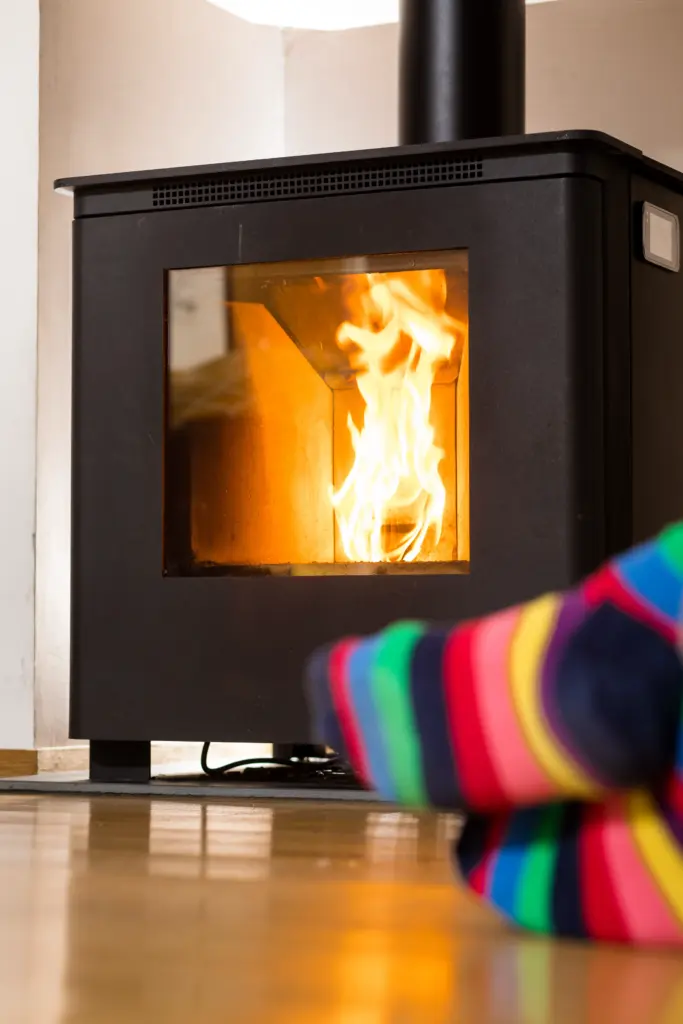
A back boiler stove gives you a visible flame and immediate room presence. It creates a proper focal point, which matters if you want your heating to feel like part of the home rather than just a setting on a control panel.
A heat pump offers a different sort of comfort. It is designed to keep the home steady and even when the system is well matched to the property. It will not give you the same visible focal point as a stove, but it can work quietly in the background.
A back boiler stove may suit you if you value:
- A real flame and cosy room heat
- A central feature in the living space
- Stove-based support for radiators or hot water
- A more hands-on heating experience
A heat pump may suit you if you value:
- Steady whole-home heating
- Minimal daily interaction
- No fuel storage
- Electric heating with high potential efficiency
Environmental impact and grants
Heat pumps are often described as low-carbon heating because they move heat using electricity rather than burning fuel at the point of use. Their real-world carbon impact depends partly on electricity generation and system efficiency.
Modern stoves should be considered alongside appliance standards, fuel quality, ventilation, servicing and correct use. A stove is still a combustion appliance, so it should be sized properly and used responsibly.
The Boiler Upgrade Scheme guidance sets out grant support for eligible low-carbon heating systems, including heat pumps and biomass boilers. Eligibility rules, system standards and grant amounts can change, so it is worth checking before making plans around funding.
What about older homes?
Older homes can make this comparison more complicated.
A heat pump may still be an option, but insulation, radiator sizing and flow temperature need proper attention. If the home loses heat quickly, the system has to work harder.
A back boiler stove may feel more familiar in a home with an existing fireplace or chimney route, but that does not automatically make it simple. The flue, appliance size and wet heating design still need to be right.
Before comparing products, ask:
- How much heat does the home actually need?
- Are the radiators suitable?
- Is there space for a cylinder, buffer vessel or thermal store?
- Is there a suitable flue route or outdoor unit position?
- How much daily involvement do you want?
- Is fuel storage practical?
- What servicing will be needed each year?
Plain questions at the start usually prevent expensive corrections later.
So, which option makes more sense?
A heat pump can be a strong choice where the home suits low-temperature heating, and you want a mostly automatic system.
A back boiler stove can be a strong choice where the home, flue route, heating demand and lifestyle all suit stove-based wet heating.
For many households, the answer comes down to both comfort and practicality. If you want heating that quietly runs in the background, a heat pump may suit you. If you want warmth you can see and feel, with the potential to support water-based heating, a back boiler stove may be worth exploring.
At Island Pellet Stoves, we believe reliable heating starts with the right design, not the loudest claim. A back boiler stove and a heat pump can both make sense, but only when they suit the home they are being fitted into.
The best next move is to understand your heat demand, check the installation requirements and choose a system that fits your daily life. That is where better heating begins.