
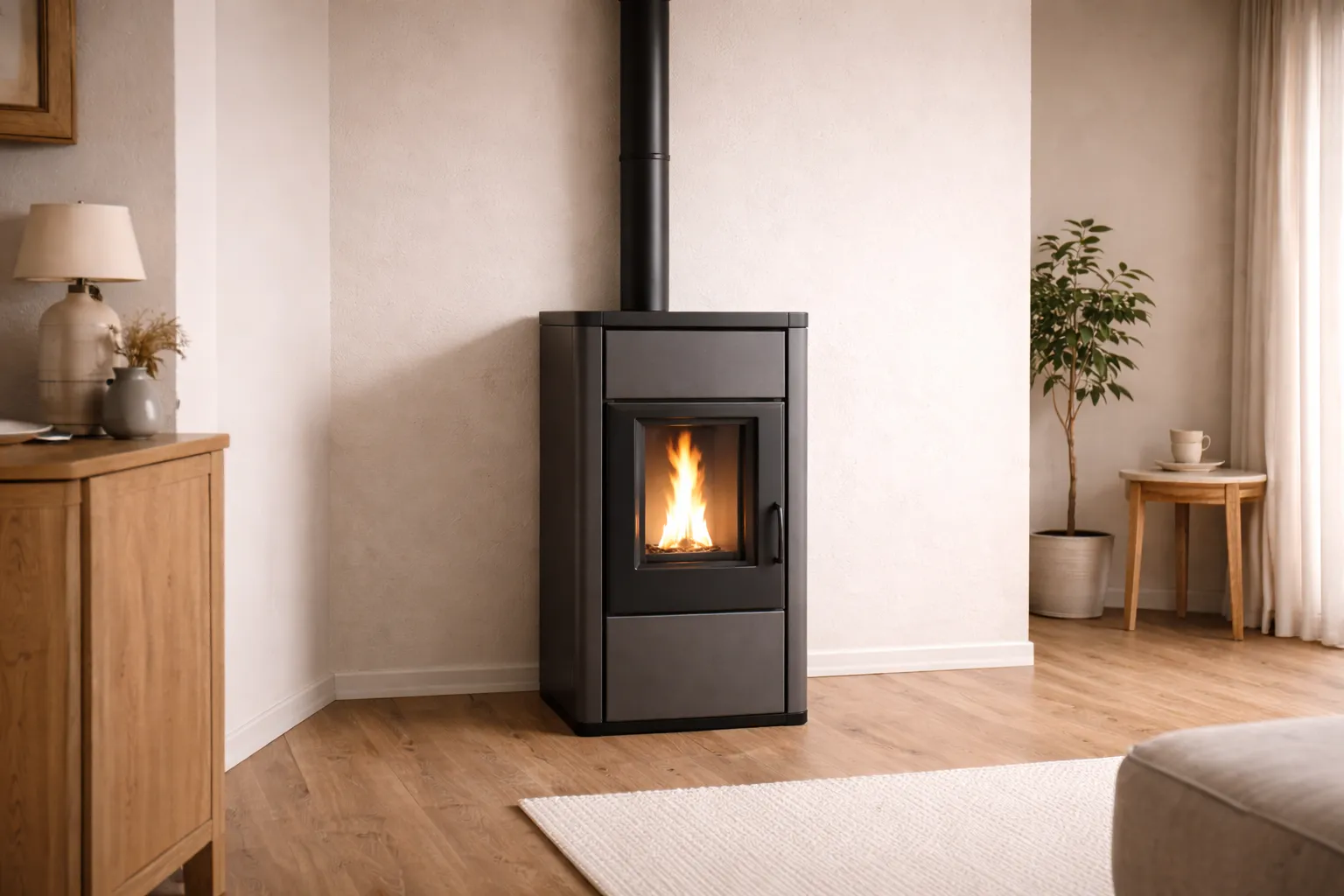
How Do You Install a Pellet Stove? A Practical Installation Guide for Homes
If you are asking how to install a pellet stove, you are already asking the right question. Installation quality has a direct impact on efficiency, reliability, and long-term maintenance. Done properly, pellet stoves deliver steady heat, clean combustion, and predictable running. Done poorly, they can become noisy, inefficient, or difficult to live with.
We approach pellet stove installation as a coordinated process rather than a single task. The appliance, flue, air supply, electrical connection, and commissioning all need to work together. When they do, the system feels dependable rather than temperamental.
The practical point is straightforward. Installing a pellet stove is a technical, regulated job, not simply a matter of positioning an appliance.
What makes pellet stove installation different from a log burner
Pellet stoves are engineered heating appliances. Unlike a traditional wood burner, where the user manually controls the fire, a pellet stove automatically manages fuel feed, airflow, ignition, and output. This delivers consistency and efficiency, but it also means the installation must properly support that system.
A typical pellet stove installation involves:
- Selecting an output that suits the space and heating goals
- Designing a compliant flue route
- Providing adequate combustion air
- Allowing correct clearances to combustible materials
- Planning a safe electrical supply
- Commissioning the appliance and setting it up for use
These elements are not optional. Pellet stoves are covered by building regulations for combustion appliances, with Approved Document J on combustion appliances and fuel storage systems setting out requirements for flues, ventilation, hearths, and safety clearances.
Planning before you buy the stove
Define the heating role first
Before choosing a model, it helps to be clear about the role the stove will play. Are you heating a single main room, supporting a wider heating setup, or looking for consistent background warmth throughout the day?
Pellet stoves perform best when sized correctly. Oversizing can lead to unnecessary cycling and reduced efficiency. Undersizing often results in disappointment during colder periods.
If you are still deciding whether a pellet stove is the right fit compared with other options, our comparison of wood-burning stoves vs wood pellet stoves explains the practical differences in operation and ownership.
Chimney or no chimney
It is a common assumption that a pellet stove requires an existing chimney. In reality, many installations use purpose-designed flue systems that do not rely on a traditional chimney structure. What matters is that the flue route meets regulatory requirements for safe discharge and access.
If this point is influencing your decision, our guide on Do wood pellet stoves need a chimney? sets out the options clearly.
Plan pellet storage early
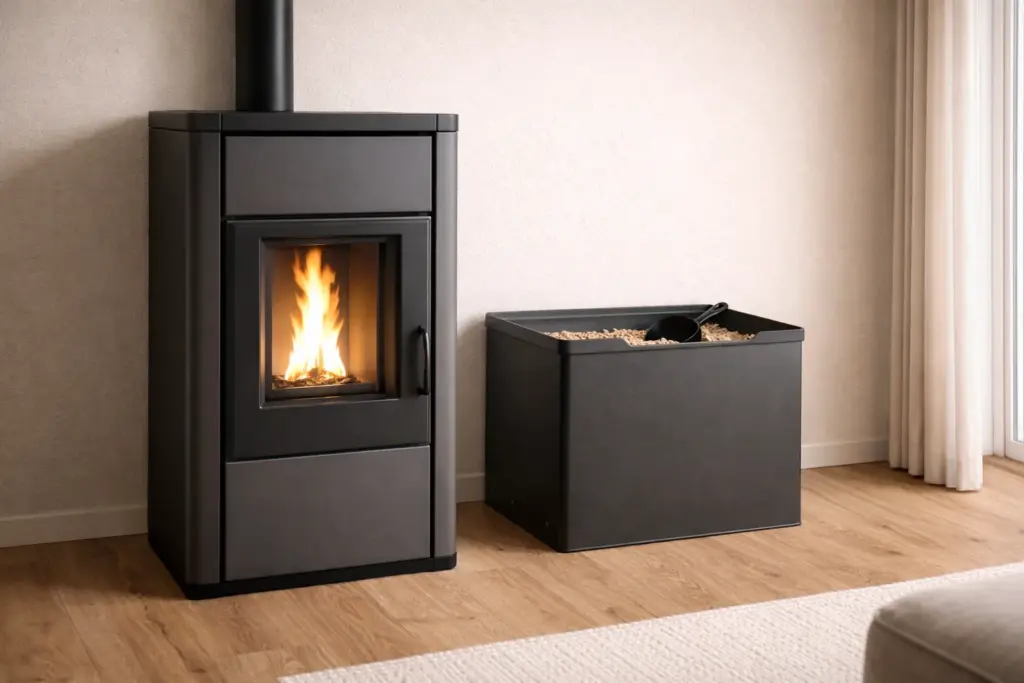
Pellet stoves are clean and tidy, but pellets must be stored correctly to remain dry and free-flowing. Storage location affects refuelling convenience and appliance performance, so it is best planned at the same time as the installation rather than improvised later.
Our practical advice on how to store wood pellets covers the essentials without overcomplicating things.
The installation elements that matter most
Flue design and routing
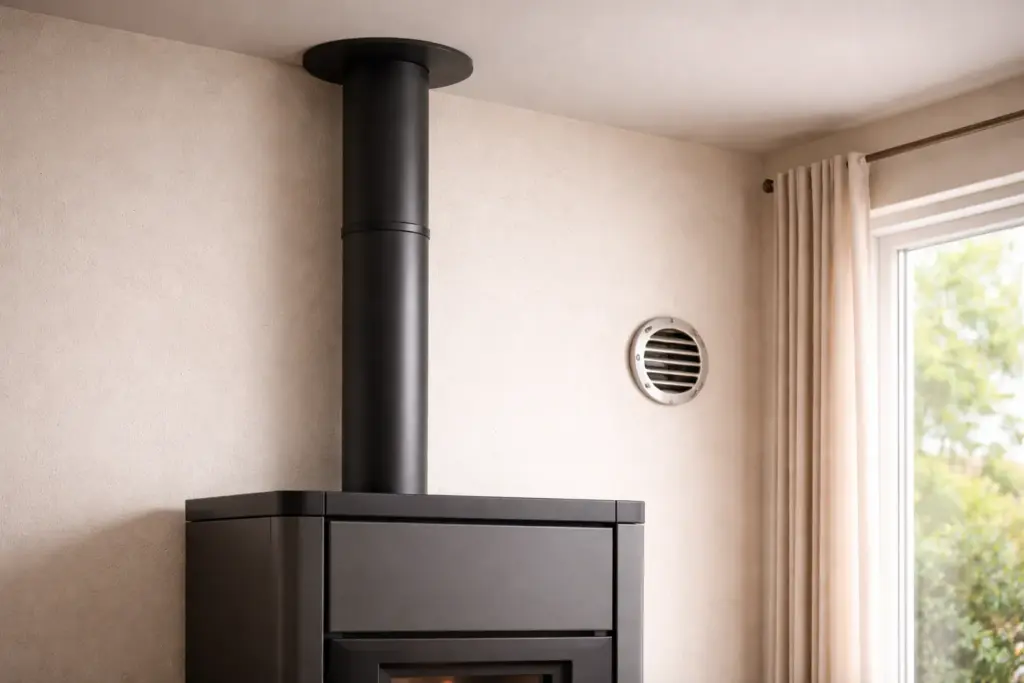
Flue design plays a central role in performance and safety. A well-planned flue supports stable combustion and reliable operation.
Key considerations include:
- Keeping the flue route as direct as possible
- Maintaining required clearances from combustible materials
- Ensuring the terminal position complies with regulations
- Allowing access for inspection and maintenance
Flue systems must comply with building regulations and should be designed in line with Approved Document J from the outset.
Combustion air supply
Pellet stoves require a consistent supply of combustion air. Depending on the appliance and the building, this may come from the room or via a dedicated air supply.
Insufficient air provision can show up as poor flame quality, inefficient operation, or nuisance shutdowns. This is why siting and ventilation decisions should be made on technical grounds rather than appearance alone.
Hearth, clearances, and siting
Although pellet stoves can look more appliance-like than traditional stoves, siting rules still apply. Clearances to combustible materials must be respected, and hearth requirements depend on the appliance specification and installation method.
Clearances and sitings should always be measured and documented. Heat does not respond well to guesswork.
Electrical supply
Pellet stoves require electricity for ignition, fans, and the fuel feed system. The electrical supply must be safe, reliable, and neatly installed.
It is also sensible to understand how the stove behaves during a power cut, as this varies by model. This should be covered during commissioning and user handover rather than discovered later.
A practical checklist for homeowners
A well-planned installation should address all of the following:
- Stove output suits the space and intended use
- Flue route is compliant and correctly specified
- Clearances to combustibles are confirmed
- Hearth and wall protection meet requirements
- Combustion air provision is adequate
- Electrical supply is planned and installed safely
- Access for servicing and maintenance is considered
- Commissioning and user setup are included
- Compliance documentation will be provided
If any of these points are treated as minor details, it is usually worth slowing the process down and asking for clarity.
Certification and compliance
Pellet stove installations should be completed by a competent installer and signed off correctly. This ensures the work meets building regulations and provides reassurance for future servicing or property matters.
HETAS operates the UK’s competent person scheme for solid fuel and biomass appliances. Its explanation of installer responsibilities and certification is set out in HETAS guidance on regulations and compliance.
Proper certification is not paperwork for its own sake. It confirms the installation has been assessed against recognised safety standards.
Choosing an appliance that suits the installation
A smooth installation often starts with choosing a stove that suits the building rather than forcing the building to accommodate the stove. This is where early planning pays off.
For homeowners looking for consistent, controllable heat with minimal daily intervention, the Lundy 5 pellet stove is a good example of an appliance designed around predictable pellet combustion. Its controlled output and compact design make it easier to integrate into a well-planned installation without unnecessary compromise.
If you are moving from research to action, speaking directly with our team is a sensible next step. It allows us to discuss your space, installation requirements, and whether a pellet stove like the Lundy 5 is the right fit before any decisions are made.
Common installation mistakes to avoid
These are the issues we see most often when installations fall short:
- Choosing stove output by guesswork rather than heat requirements
- Treating flue design as an afterthought
- Ignoring access for servicing and maintenance
- Underestimating pellet storage needs
- Skipping proper commissioning and setup
None of these is a dramatic failure, but each one chips away at reliability and enjoyment over time.
In summary
If you are asking how to install a pellet stove, the answer is not a single action. It is a coordinated process that brings together appliance choice, flue design, air supply, electrical provision, safe siting, and proper commissioning.
The practical takeaway is clear. Plan the installation with the same care you plan the heating outcome. When that happens, pellet stoves deliver the steady, clean, low-effort heat they are designed to provide.