
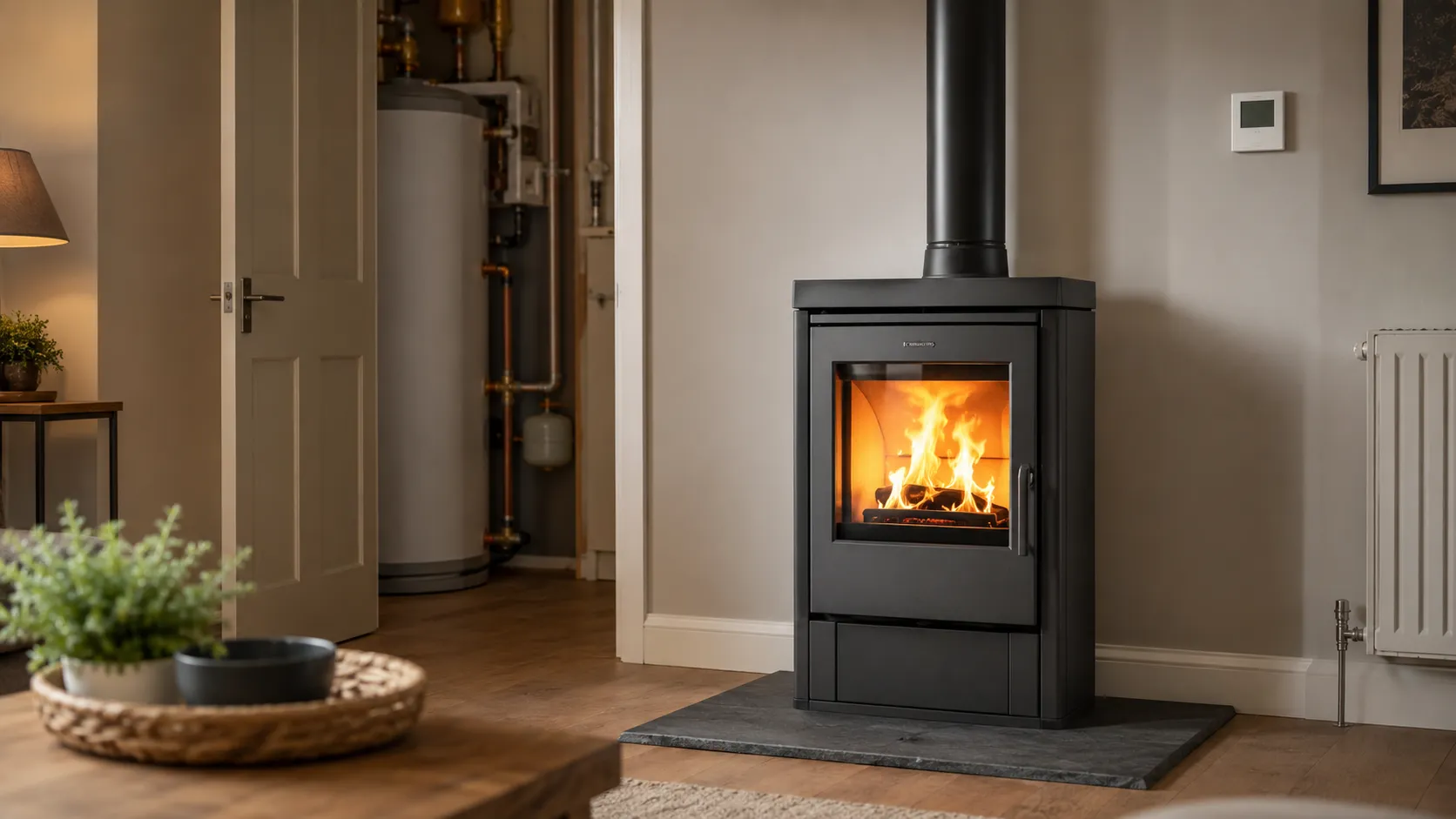
How to get the log burner look without the smoke: options, costs and installation tips
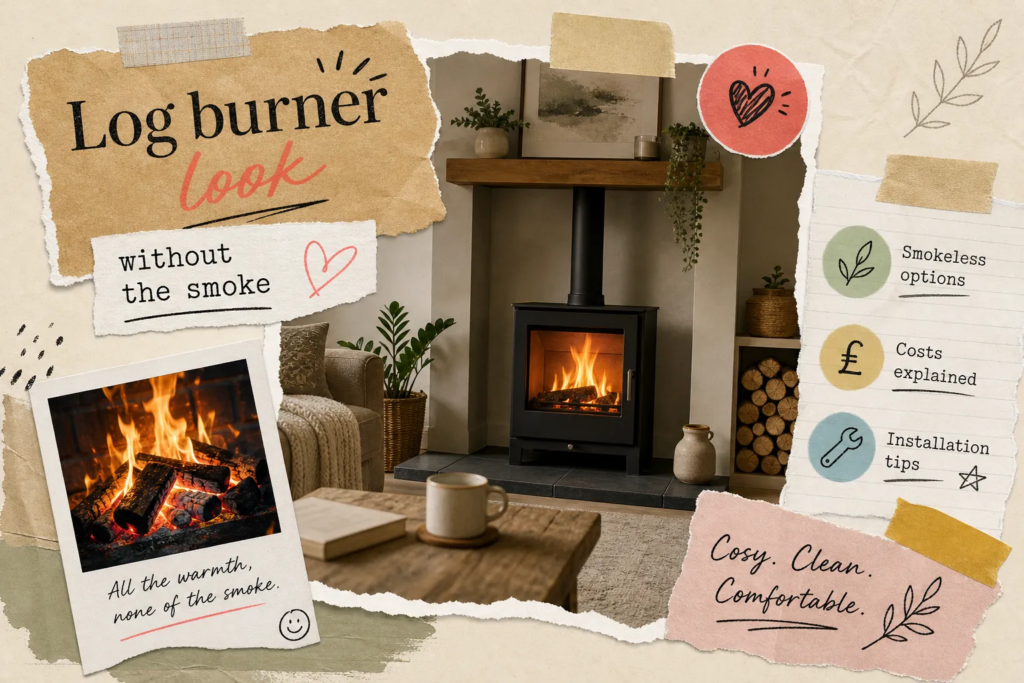
There is something a radiator will never replicate: the sight of a real flame dancing behind a glass door, throwing that particular orange light across a room in winter. A log burner creates a visual anchor, a sense of warmth that goes beyond the measurable output in kilowatts. It remains one of the most commonly searched heating topics in the UK, and the desire is completely understandable.
The question this article answers is a practical one: what if you could have exactly that look and feel without the smoke, the mess, or the growing regulatory burden that now accompanies traditional wood burning? This is a straightforward guide covering the main stove types and heat outputs you need to know, the UK regulatory landscape in 2026, real installation costs, and the newer generation of stoves that deliver the log burner aesthetic far more cleanly. Island Pellet Stoves, a Cardiff-based manufacturer, spent seven years engineering exactly that kind of solution. First, the honest picture of what a traditional log burner actually involves.
What a log burner actually gives you (and why it is so hard to give up)
The ambience no radiator can replicate
A wood-burning stove delivers something genuinely different from any other heat source. Many owners describe the warmth as more immediate and enveloping than forced-air systems, a radiant quality that heats people and objects rather than simply raising the air temperature. The visible flame creates a centrepiece that gas and electric alternatives have rarely matched to most people’s satisfaction. Add the faint smell of burning timber and the sounds of a live fire, and the effect on a room is transformative in a way that no flat-panel heater comes close to achieving.
Types of log burner and what heat output to expect
There are three main formats to consider before you start shopping. Freestanding wood-burning stoves sit on a hearth and connect to a flue, with outputs typically ranging from 4 to 8 kW. Freestanding multi-fuel stoves work similarly but include a grate and ash pan for burning logs and approved smokeless fuels, again covering roughly 4 to 10 kW. Inset or cassette stoves sit inside an existing fireplace opening for a cleaner, integrated appearance, and most standard models deliver around 5 kW.
A nominal 5 kW stove is the most common domestic choice and suits an average living room. The right size depends on room volume, insulation, glazing, and draughts, not floor area alone. A qualified installer should run the calculation before you buy, because oversizing is a common mistake: a large stove running well below its rated output burns less efficiently and generates considerably more smoke.
The practical reality: what traditional wood burning actually costs you
Smoke, mess, and the weekly routine
A log burner requires consistent attention that first-time buyers regularly underestimate. Loading and lighting the fire, removing ash, sourcing and storing fuel: these are genuine weekly commitments, not occasional tasks. Seasoned logs need roughly two years to dry properly in open-sided storage, and kiln-dried logs still need a covered, dry area to prevent them reabsorbing moisture. The chimney requires sweeping at least once a year, and soot, bark debris, and fine ash are an unavoidable part of daily life with a wood burner.
UK regulations in 2026: Ecodesign, DEFRA approval, and smoke control areas
The regulatory picture has changed considerably in recent years, and it matters before you commit to a purchase. Since January 2022, all new domestic wood-burning and multi-fuel stoves placed on the UK market must meet Ecodesign emissions and efficiency standards. That is a baseline product requirement, not a licence to burn wood wherever you choose.
If your property falls within a designated smoke control area, the rules are stricter. You may not emit smoke from your chimney, and you may only burn ordinary wood in a stove that appears on the government’s official exempt-appliance list: a so-called DEFRA-approved stove. Burning wood in a non-exempt appliance in a smoke control area carries a fine of up to £1,000. The current smoke-emission limit for newly installed appliances in smoke control areas in England is 3 g/hour. A government consultation published in 2026 proposed tightening this further, potentially to 1 g/hour.
Ecodesign compliance is not the same as DEFRA exemption. A stove can carry an Ecodesign label and still be illegal to use with wood in a smoke control area if it is not separately listed as an exempt appliance. Check the exact make and model number against the official DEFRA register before purchasing. Smoke control areas are designated by local councils, so use the DEFRA interactive map for England, or your local council’s website in Scotland, Wales, or Northern Ireland, to confirm whether your address is affected.
Cleaner alternatives that still look the part
How modern pellet stoves replicate the dancing flame
Wood pellet stoves have matured significantly as a category. The best modern designs use a proprietary combustion system that produces a natural, flickering flame genuinely comparable to a traditional log burner. Pellets are a compressed, low-moisture fuel that generate substantially fewer particulates than logs. Because the appliance feeds, ignites, and controls temperature automatically on a programmable timer, no manual input is required day to day. Running costs vary depending on pellet price and local electricity tariffs, but for many households they prove competitive with oil heating.
How Island Pellet Stoves approached the problem differently
Island Pellet Stoves is a Cardiff-based manufacturer founded by two engineers who, according to the company, spent seven years and over 10,000 hours solving the specific problems that make log burners impractical for many UK homeowners: noise, smoke, and constant manual attention. The stated aim was to build a wood pellet stove compact enough to fit standard British fireplace openings without structural modification, one of the more practically focused design briefs in this product category.
The engineering approach here is worth understanding. Most pellet stoves use fans to force hot air around the room, which generates noticeable background noise. Island Pellet Stoves uses a finned-tube heat exchanger instead, allowing heat to circulate by natural convection with far less sound. The company reports substantially lower particulate emissions than a conventional log burner when tested under comparable conditions, and the sealed fuel system greatly reduces the chance of smoke or debris entering the room during normal operation. For anyone who wants the log burner experience without the log burner realities, this is the most practically engineered answer currently available in the UK.
Fitting a stove into your existing UK fireplace: costs and certification
What HETAS certification means and why it matters
HETAS is the government-recognised body for solid fuel and biomass heating in the UK. A HETAS-registered installer can self-certify a solid-fuel stove installation under Building Regulations, which means you do not need a separate building-control application to your local authority. The HETAS Certificate of Compliance is essential: insurers require it, conveyancers ask for it at resale, and it is your evidence that the installation meets the relevant legal standards.
Island Pellet Stoves provides nationwide HETAS-accredited installation as part of their all-in service, including a personal training session so the homeowner knows exactly how to operate the stove from day one. There are no hidden extras and no separate tradespeople to coordinate.
What a full installation actually costs
For a traditional log burner in an existing chimney, budget approximately £2,500 to £4,000 for a mid-range stove with a new stainless-steel flue liner, hearth, register plate, and HETAS certification. If the property has no chimney and requires a twin-wall external flue system, the cost rises to £3,000 to £6,000 or more. Complex work, premium stoves, or installations in London and the South East can reach £5,000 to £7,000 and beyond.
Island Pellet Stoves’ all-in packages start from £4,950 (based on the company’s current published pricing, always request a written quote confirming exactly what is included). That price covers the custom-built stove, flue pipes, professional installation, HETAS certificate, and a training session. For a homeowner comparing options honestly, the cost difference between a pellet stove package and a traditional log burner installation is narrower than it first appears, particularly once emissions compliance, fuel convenience, and maintenance time are factored in.
Sizing, fuel, and getting the most from your stove
Matching heat output to your home
Sizing a stove correctly matters as much as choosing the right type. A 3 kW output suits a compact room, cabin, or small boat space. A standard 5 kW model covers an average living room. An 8 kW stove connected to a radiator circuit can supplement whole-house heating as a genuine contribution to your central heating. The principle is consistent across all stove types: do not oversize. A large stove running at low output burns fuel poorly, produces more smoke and tar, and wears faster. Room volume, glazing, insulation, and draughts all affect the required output, and a qualified installer should confirm the figure before anything is ordered.
Fuel quality and burn practice for traditional log burners
For those committed to a traditional wood-burning stove, fuel quality is the single biggest lever you have over performance and emissions. Burn only dry, untreated wood at 10 to 20 per cent moisture content, measured on a freshly split face rather than the surface. Kiln-dried logs marked Ready to Burn are the most consistent choice. Never burn wet logs, painted or treated timber, or any household waste.
After loading fresh logs, keep the air supply fully open until the wood is flaming vigorously and has become well charred. Only reduce the burn rate once the wood has become glowing charcoal. Routine slumbering of fresh logs increases smoke, tar production, and carbon monoxide risk significantly. A well-run fire burns hot and clean; a poorly run fire burns everything except the wood efficiently.
Frequently asked questions about log burners in the UK
Can I fit a log burner in a smoke control area?
Yes, but only if the stove is listed as an exempt appliance on the DEFRA register. An Ecodesign-compliant stove is not automatically exempt. Check the exact make and model before purchasing, and use the DEFRA interactive map or your local council’s website to confirm whether your address falls within a designated smoke control area.
Do I need HETAS certification for a stove installation?
You are not legally required to use a HETAS installer, but doing so allows the installer to self-certify the work under Building Regulations without a separate local-authority building-control application. The resulting HETAS Certificate of Compliance is required by most insurers and will be requested by conveyancers when you sell. Using a non-registered installer means you must apply for building control approval separately, and you remain responsible for ensuring the installation is compliant.
Is a wood pellet stove a like-for-like replacement for a log burner?
In most practical respects, yes. A quality pellet stove produces a real, visible flame, outputs heat in the same kW range as a comparable log burner, and fits into a standard fireplace opening. The key differences are fuel type, automation, and emissions. Pellet stoves are cleaner burning, largely self-managing once loaded, and better suited to smoke control areas. They do require an electrical supply for the control system and ignition.
The cleaner flame is within reach
The log burner as an ideal is not going anywhere. The warmth, the visible flame, and the focal point it creates in a room are things people genuinely value, and rightly so. The question in 2026 is whether the traditional version, with its smoke, maintenance demands, and growing regulatory complexity, remains the most practical route to that experience for most UK homeowners.
For many people with an existing fireplace, the answer is increasingly no. Modern pellet stoves deliver the same ambience with far less effort and dramatically lower emissions. The compact, quiet, HETAS-certified designs from Island Pellet Stoves are a strong example of what that now looks like in practice. Whichever route you choose, the key decisions remain the same: select the right heat output for your room volume, confirm whether you are in a smoke control area, understand what a realistic installation costs with all components included, and insist on HETAS-certified fitting.
Get in touch with the Island Pellet Stoves team to find the right stove for your home and fireplace.